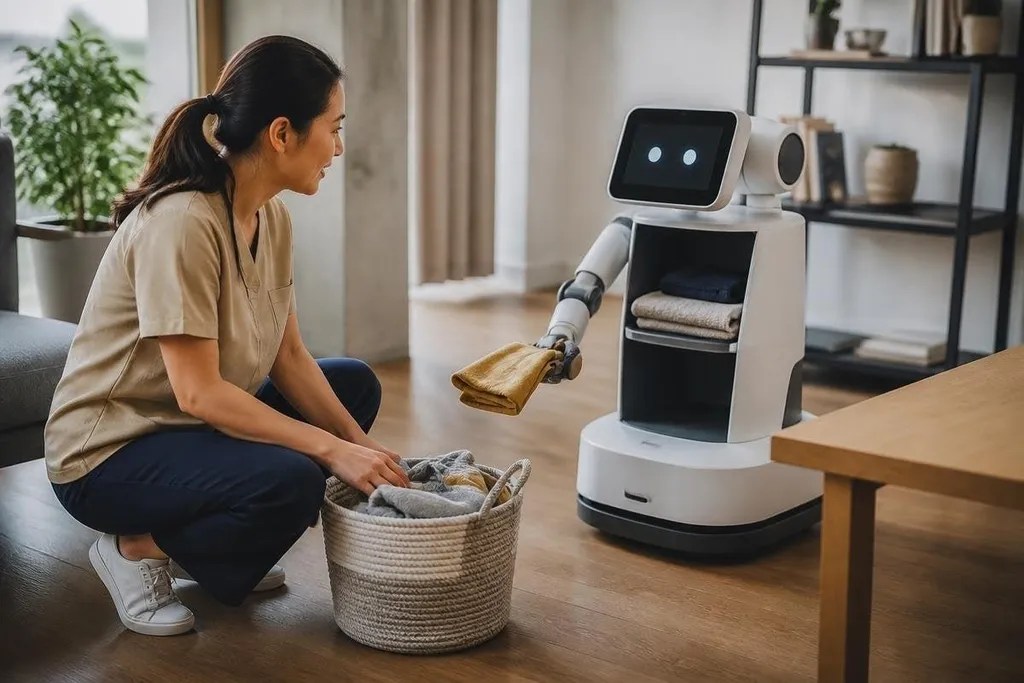
A companion robot has to do more than move, speak, or answer a prompt. It has to earn a place in someone’s home, care setting, hotel, or workplace, and that creates business options beyond a one-time hardware sale.
For a company planning a product, the useful question is practical: who pays, what does the robot do each day, and what happens when it fails?
- Homes: recurring fees for setup, updates, and remote help
- Care settings: support for reminders, calls, and routine checks
- Service businesses: leased robots with software and maintenance included
Start with a repeated task
The clearest business case begins with a task that happens often and has a visible cost. A companion robot could remind someone about a meeting, connect them to a family member, guide a visitor through a building, or check that a routine has started.
Those tasks differ in risk and value. A missed hotel direction may waste a few minutes. A missed medication reminder may need a trained person to step in. The company selling the robot needs separate prices, response plans, and safety rules for each setting.
This also changes the buyer. A family may pay for convenience at home. A care provider may pay for fewer routine interruptions. A hotel may pay for visitor service while keeping staff available for tasks that need human judgment.
Four ways the money can work
Hardware sales are the easiest model to explain. The buyer pays for the robot, while the maker earns later income from replacement parts, repairs, software updates, or a service plan. That model works best when the robot has a clear use and the owner can keep it running without a specialist visit.
Leasing lowers the first payment. A provider can charge a monthly fee that includes the robot, software, maintenance, and staff training. This gives the buyer a known cost, but the seller takes responsibility for battery wear, damaged parts, and devices that sit unused.
A service fee can fit settings where the robot supports a larger operation. A care company might pay for remote supervision or staff alerts. A property manager might pay for visitor guidance and after-hours calls. The robot becomes part of a service contract, so uptime and response time matter as much as speech or movement.
There is also room for software sold across several robot models. That software could manage user accounts, permissions, call routing, or task logs.
The hard part is privacy: a home robot may handle voices, video, health details, and information about when someone is alone.
That privacy risk makes Robot24.com companion robot reports useful for checking what a system stores, who can access it, and which business claims have a test behind them.
The limits that shape the deal
Companion robots face a simple test: do people keep using them after the first week? If setup takes too long, speech fails in a noisy room, or the robot needs frequent charging, the business case weakens even if the first demonstration looks smooth.
Trust brings another limit. People need clear control over cameras, microphones, stored conversations, and remote access. A company that cannot explain where data goes should expect pushback from families, care staff, and building managers.
Support costs can also exceed the hardware margin. A robot that needs frequent cleaning, charging, software fixes, or replacement motors may require a local service team. That expense belongs in the price before a pilot begins.
A practical buyer checklist
Use these checks before funding a companion robot pilot:
- Name the payer: write down the person or department that approves the monthly cost.
- Set one task: choose a repeated job with a clear start and finish.
- Measure use: record completed tasks, failed interactions, charging stops, and staff callouts.
- Check privacy: list every sensor, stored record, access role, and deletion process.
- Price support: include training, repairs, replacement parts, and remote help.
- Set a stop rule: decide the usage level and service cost that would end the pilot.
I'd fund a companion robot only when the service plan is clearer than the hardware pitch. That means a named buyer, a measured task, a support budget, and a plan for data when the robot is switched off.
The next business opportunity will belong to the company that can keep one robot useful for months, not the company that makes the first demo look busy.